
Date : 10/1/2020
Light and surface interaction is a course where we learn the communication between materials and its effects on a large scale by studying the samples of it while experimenting. It is one of the most communicative organs of display. Light in a room is one of the most important aspects in understanding spaces on a whole. It not only illuminates the room but also transform it by either making it look like a complete disaster or into a living or a habitual space. Thus light is a medium through which we perceive the ambience around us.
We started the lecture with the introduction of studying how light performs on different surfaces, whether it absorbs, reflects or transmits light.
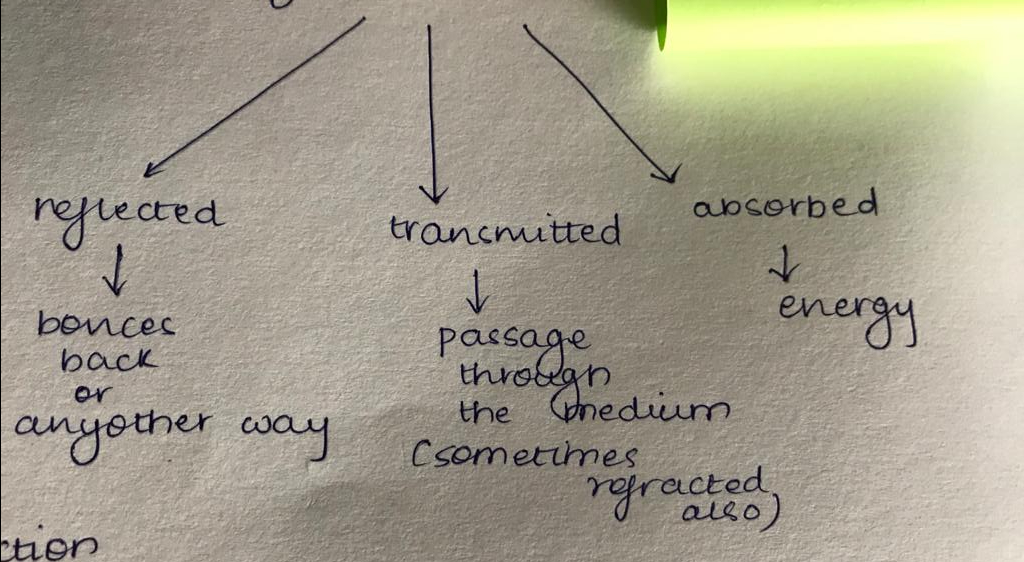
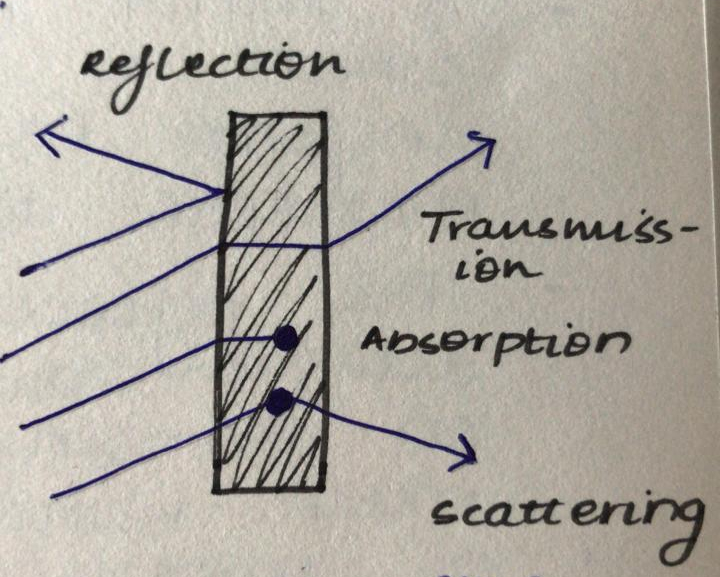
- REFLECTION: Light, when reflects it bounces back, it is reflected or goes any other way. It has an angle of incidence and an angle of reflection which is spoken off to be equal to each other on a smooth surface. Objects with a shiny or a glossy surface usually reflect light for example metal spoon and aluminium foil. The reflection is classified into two types:
- Specular / Regular Reflection : Specular Reflection is a regular reflection. It’s reflection is clean and sharp. The light is reflected from a surface which is reflective and smooth. For example, Mirror.
- Diffused Reflection : Diffused Reflection can be defined to be contrary to Specular Reflection. In general surfaces in Diffused Reflection are rough having scratches, dents. This will lead to a degradation in the calibre of its reflection and brightness. For example, a rough surface of a stone or bricks.
- TRANSMISSION: When light is transmitted it passes through one medium and goes through the other. Sometimes, it also gets refracted (change in the direction of light when it passes through it). For example, sheer curtains. Transmission is further classified into two types:
- Specular Transmission :
- ABSORPTION: When light is absorbed, i.e when it strikes the surface, it gets converted into some kind of energy. Usually it is in form of heat. For example, stone and paper.
 Cyclic Quotidian